

Missing teeth can affect daily life in different ways. Some patients find it harder to chew, while others notice changes in speech, the way the bite feels, or the look of the gap itself. Tooth loss can happen to anyone and may be linked to decay, gum disease, injury, or the need for extraction.
A dental implant can be used to replace a missing tooth. They have been used in dental care for many years and may be considered when a fixed replacement is being discussed. At The Smile Collective, dental implant care is available across Mornington, Strathmore, Mount Eliza, Mooroolbark, Greensborough, and Oakleigh.
What Is a Dental Implant?
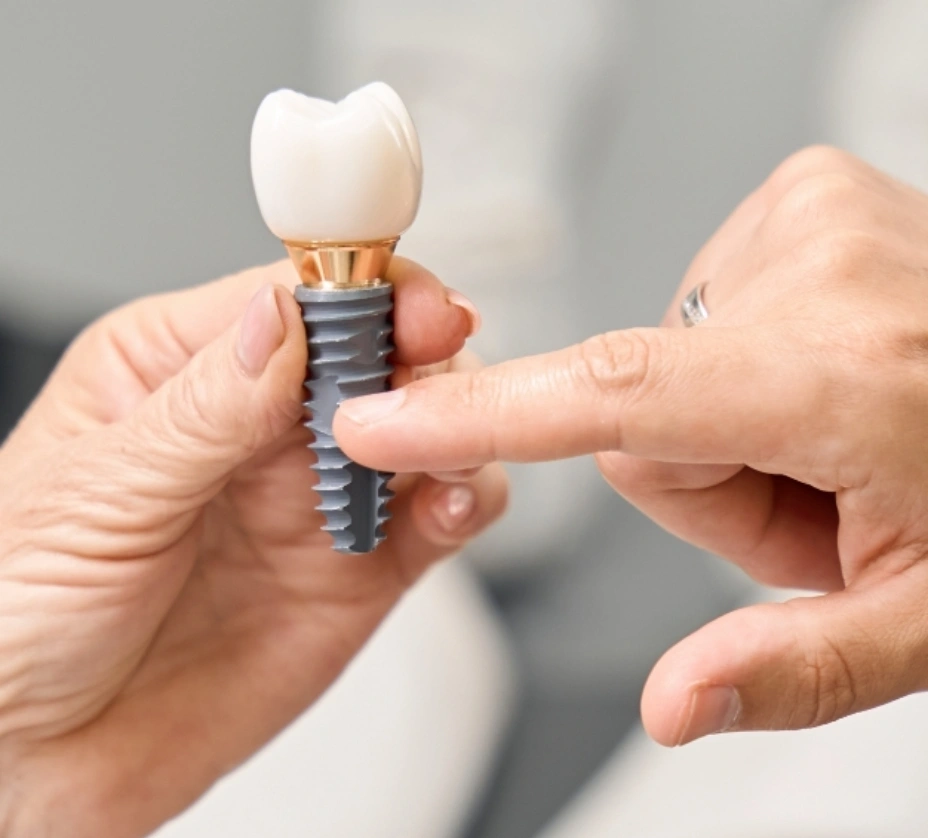
It is placed in the jaw where a tooth is missing and acts as the base for a replacement tooth. It usually has three main parts. The first is the implant itself, which is most often a titanium post placed in the jawbone to take the place of the root. The second is the abutment, which is the small connector attached later. The third is the final replacement tooth, which is often a crown, but in some cases may be part of a bridge or denture.
Once the implant has been placed, the surrounding bone heals around it over time. This stage is known as osseointegration. It is the process that helps the implant become secure in the jaw.
Implants can remain in place for many years, but they still need ongoing care. Daily cleaning and regular dental visits are important for looking after the area. Some parts may also need maintenance over time.
Am I a Good Candidate for Dental Implants?
Suitability for dental implants is assessed on an individual basis. In general, a good candidate will have healthy gums, enough bone to support the implant, and general health that allows healing after the procedure. Smoking can also affect healing, which is why non-smokers are often preferred for this type of treatment.
A consultation is important because implants may not be suitable for every patient when first assessed. Factors such as gum disease, low bone support, poor oral hygiene, and some medical conditions or medicines can affect whether treatment is appropriate. These need to be reviewed before a treatment plan is made.
Some patients may need treatment first before an implant can be placed. This can include gum treatment or bone grafting if there is not enough bone in the area planned for the implant. The purpose of the consultation is to assess your teeth, gums, bone support, and medical history so that the most suitable option can be discussed clearly.
The Dental Implant Procedure: Step by Step
Dental implant treatment is generally planned in stages. It begins with a consultation, where the area is checked, your medical history is reviewed, and X-rays or scans are taken to look at the bone and gums. This helps determine whether an implant may be suitable and whether treatment such as bone grafting is needed before placement.
The next stage is implant placement. During this process, the implant is placed into the jawbone, and local anaesthesia is used to minimise discomfort. After that, a healing period follows while the bone joins with the implant. This stage is called osseointegration and often takes around three to six months, depending on the area being treated and how healing progresses.
Once healing is complete, the abutment is attached. After that, the final crown or other replacement tooth is made and fitted. Follow-up visits are then used to check the implant, the gums, and the bone around it, and to make sure the area is healing and functioning as expected.
Dental Implants vs. Other Options
Dental implants, bridges, and dentures are all used to replace missing teeth, but they differ in how they work and what they involve:
- Implants are fixed in the jaw and do not rely on nearby teeth in the same way a bridge can.
- Bridges are fixed, but they may involve changing the teeth beside the gap to support the replacement.
- Dentures are removable and may need more adjustment over time.
Maintenance and appearance can also differ between these options. Implants stay in place and may suit patients who prefer a fixed replacement, while dentures are removable and may be considered when several teeth are missing or implants are not suitable. Bridges are fixed as well and may be an option when surgery is not part of the treatment plan.
Cost also differs. Implants often involve a higher upfront cost because treatment happens in stages, while bridges and dentures may have different maintenance or replacement needs over time. This is one reason it helps to look at the short-term and longer-term costs together when comparing your options.
How Much Do Dental Implants Cost in Melbourne?
Dental implant costs can vary, so a personalised quote is usually needed after examination. The total can depend on how many implants are required, whether extra treatment such as bone grafting is needed, the type of replacement tooth being fitted, and how complex the treatment is overall.
It is also worth remembering that implant treatment usually involves several stages. Planning, scans, the implant procedure, healing reviews, and the final crown or other replacement can all form part of the total cost. This is why a consultation is the clearest way to understand what may be involved in your case.
Health fund benefits may help in some situations, depending on your cover. Payment plan options may also be available, depending on the clinic and treatment being discussed. The best place to start is with an assessment and a personalised quote based on your oral health and treatment needs.
Implants at The Smile Collective
Dental implant care is available at The Smile Collective in Mornington, Strathmore, Mount Eliza, Mooroolbark, Greensborough, and Oakleigh. The first step is an assessment of your teeth, gums, bone support, and medical history to see whether implant treatment may be suitable in your case.
If you are thinking about dental implants, a consultation is a practical place to begin. It gives you time to ask about the treatment process, healing, costs, and whether an implant or another option may be more suitable for your needs.