
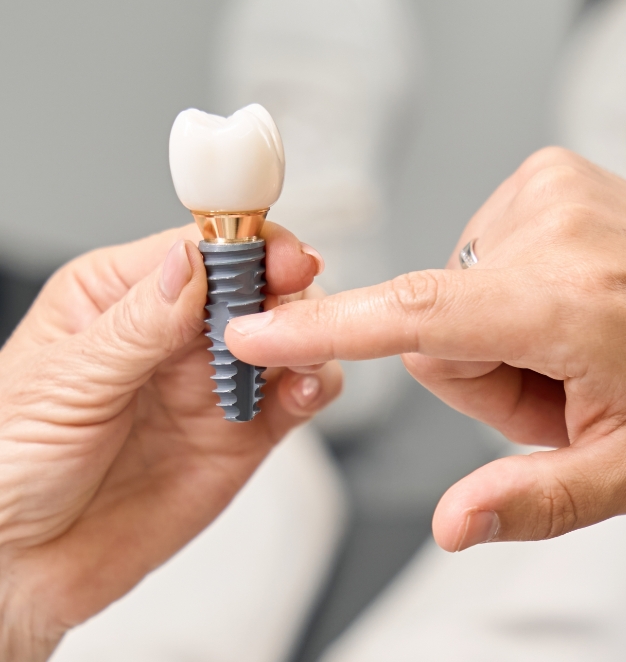

Dental implants are one option for replacing missing teeth. They involve placing a small implant, usually made from metal, into the jawbone to act as a base for a replacement tooth, such as a crown, bridge, or implant-supported denture.
What Are Dental Implants?
A dental implant functions like an artificial tooth root. It is usually made from titanium or another material that works safely with the body. The implant is placed into the jawbone where a tooth is missing. Over time, the bone naturally attaches to the implant in a process called osseointegration, which means the bone grows and bonds closely around the implant to help keep it stable.
Once the implant has joined with the bone, a small connector (called an abutment) is attached to it. A crown, bridge, or denture is then placed on top to complete the replacement. This helps provide support and stability for the new teeth.
Dental implants may be considered for:
- Replacing a single missing tooth
- Supporting a bridge without affecting nearby teeth
- Holding dentures more securely in place
- Replacing several missing teeth
Not everyone is suitable for dental implants, and a full assessment is needed before treatment can begin.
When Implants May Be Recommended
Implants may be recommended when:
- One or more teeth are missing, and nearby teeth are healthy
- Dentures feel loose or uncomfortable
- A fixed option is preferred instead of a removable one
- There is enough bone in the jaw to hold the implant
- The gums are healthy, and gum disease is managed
However, implants may not be suitable if:
- There is not enough bone to support an implant
- Gum disease is active
- Certain medical conditions or medications affect healing
- There is heavy smoking or poor oral hygiene
- Surgery is not possible or advised
During your consultation, the dentist will review your oral health, bone structure, medical history, and preferences to determine if implants are suitable for you.