

Invisalign Clear Aligners

Invisalign treatment is available at all six Smile Collective clinics in Mount Eliza, Mornington, Oakleigh, Mooroolbark, Greensborough, and Strathmore.

Invisalign braces, The Smile Collective Dentistry

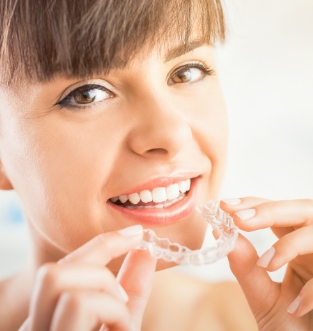
Invisalign is a clear aligner system used to gently move teeth into better alignment using a series of custom-made, removable trays. The aligners fit closely over your teeth and are replaced with a new set at regular intervals as treatment progresses.

Because the aligners are clear and removable, some patients choose Invisalign as an alternative to traditional braces for mild to moderate orthodontic concerns.

What Is Invisalign?

Invisalign is an orthodontic system that uses a sequence of clear, removable aligners to guide teeth into new positions over time. Each aligner is made from a smooth, medical-grade plastic material and is custom-formed to fit your teeth.

The aligners work by applying gentle pressure to certain teeth to help guide them into new positions. Each new set of aligners is slightly different from the last, allowing your teeth to move gradually over time in a planned sequence.

Unlike braces, Invisalign does not use metal wires or brackets. The aligners can be removed for eating, drinking, brushing, and flossing, which makes cleaning and maintaining oral hygiene easier. However, to be effective, the aligners need to be worn for the recommended number of hours each day.

Suitable for Invisalign

Invisalign may be suitable for both teenagers and adults with mild to moderate alignment issues. It can help address a range of orthodontic conditions, including:

  • Crowded or overlapping teeth
  • Gaps or spaces between teeth
  • Mild overbites, underbites, or crossbites
  • Relapse after previous orthodontic treatment
  • General misalignment for functional or aesthetic reasons

Suitability depends on factors such as bone health, gum condition, and the complexity of the movement required. Invisalign may not be suitable for severe bite discrepancies, significant rotations, or skeletal issues that require surgical or fixed orthodontic correction.

During your consultation, the dentist will assess the complexity of your case and discuss whether Invisalign is appropriate or if another orthodontic method may be more suitable.

The Invisalign Process


1. Consultation and Assessment
The first stage involves a thorough examination of your teeth, bite and gums. Digital scans, photographs and X-rays may be taken to record your current alignment and structure. These records help create a digital model of your teeth to guide treatment planning.

2. Digital Planning
Using 3D software, the dentist or orthodontist can plan how your teeth will move over time. This digital plan helps visualise the sequence of movements and design each aligner. Every stage of movement is precisely mapped to achieve gradual repositioning.

3. Custom Aligner Fabrication
Once the plan is approved, a series of aligners is manufactured. Each aligner is worn for a set period, usually one to two weeks, before moving to the next in the sequence.

4. Fitting Your Aligners
When the aligners arrive, the dentist ensures they fit comfortably and provides instructions on how to insert, remove and clean them. Small, tooth-coloured attachments may be placed on some teeth to improve grip and control of movement.

5. Wearing the Aligners
Aligners should typically be worn for 20–22 hours per day, removed only for eating, drinking (except water), and oral hygiene. Consistent wear is essential for effective results.

6. Monitoring Progress
Review appointments are scheduled every six to eight weeks to monitor progress and ensure tooth movement is proceeding as planned. New sets of aligners are provided at these visits.

7. Refinement Stage
In some cases, additional or “refinement” aligners may be made after the main series to fine-tune the final alignment.

8. Retention Phase
Once alignment is complete, retainers are made to hold the teeth in their new positions. Wearing retainers as advised helps prevent teeth from drifting back.

Want to book a consultation Find your local Smile Collective Centre

1 / 0

Greensborough

Mooroolbark

Mount Eliza

Mornington

Oakleigh

Strathmore

Expected Sensations During Treatment

When starting a new set of aligners, it’s common to feel mild pressure or tightness as your teeth begin to move. This feeling lessens after a few days as your mouth adjusts. Some patients may also notice temporary changes in speech, mild dryness, or extra saliva at first. These effects are short-term and part of the normal adjustment period.

Limitations and Considerations

Invisalign, like all orthodontic treatments, has certain limits. It may not be suitable for very crowded teeth, large bite differences, or complex jaw movements.

Other points to consider include:

  • Aligners must be worn as instructed each day to be effective.
  • Some cases need small attachments or elastics to guide tooth movement.
  • Complex movements may take more time or require extra aligners.
  • Teeth may shift after treatment if retainers are not worn as advised.
  • Aligners can discolour if exposed to strongly coloured drinks or not cleaned properly.
  • The dentist will explain these considerations and help you understand what the process involves before starting treatment.

Risks

As with any orthodontic treatment, some effects or problems may occur during Invisalign care. These can include:

  • Mild soreness or pressure when switching to new aligners
  • Temporary changes in speech
  • Gum irritation or dryness
  • Cracks or distortion of aligners if they are overheated or damaged
  • Slight root shortening (root resorption)
  • Slower progress if aligners are not worn for the recommended time
  • Tooth movement after treatment if retainers are not used

Daily cleaning, routine check-ups, and following the advice given by the dentist can help lower these risks.

Oral Care During Invisalign

Keeping your teeth and aligners clean is important to support gum health and prevent staining or odour. You can care for your teeth and aligners by:

  • Brushing after every meal before reinserting aligners
  • Cleaning aligners daily using lukewarm water and mild soap or cleaning crystals
  • Avoiding toothpaste on aligners, as it can scratch the surface
  • Storing aligners in their case when not being worn
  • Flossing daily to remove food and plaque between teeth
  • Visiting the dentist regularly for cleaning and progress checks
  • These steps help keep both your mouth and aligners clean and comfortable during treatment.

Duration of Treatment

The length of Invisalign treatment varies from person to person. It depends on how complex your case is and how consistently the aligners are worn. Some mild cases may take several months, while more involved treatment may take longer.

The dentist will discuss an estimated timeframe during your consultation and planning stage. Regular follow-ups help ensure your treatment stays on track.

The Role of Retainers

After Invisalign treatment, retainers are used to help keep your teeth in their new positions. Without retainers, teeth can gradually shift back toward where they were before treatment.

Retainers can be removable—similar in appearance to aligners—or fixed, using a thin wire attached behind certain teeth. The dentist will recommend the most suitable type and explain how long and how often to wear it.

Invisalign at The Smile Collective

Invisalign treatment is available at all six Smile Collective clinics in Mount Eliza, Mornington, Oakleigh, Mooroolbark, Greensborough, and Strathmore.

Each case begins with a detailed consultation and digital assessment to check suitability. The dental team creates an individual treatment plan, monitors your progress at each stage, and provides guidance on care and comfort throughout.

If you would like to find out more about Invisalign or to discuss whether clear aligners may be suitable for you, please contact your nearest Smile Collective clinic to arrange a consultation.