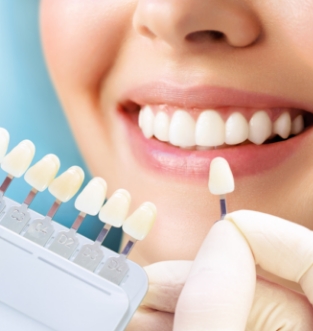


Porcelain veneers are thin, custom-made ceramic shells that cover the front surface of teeth. They may be chosen to change the shape, colour, or overall appearance of one or more teeth. Veneers are considered a cosmetic dental option and are only provided after a full dental assessment confirms that they are suitable.
As veneers involve changes to the tooth’s surface and require careful planning, they should only be completed under the care of a qualified dental professional.
What Are Porcelain Veneers?
Porcelain veneers are different from composite veneers, which are made from a tooth-coloured resin shaped directly onto the teeth. Composite veneers are applied in the dental chair, while porcelain veneers are created in a laboratory before being placed.
In some situations, other approaches such as bonding or orthodontic treatment may be suggested. The most suitable option depends on your tooth condition, bite, and overall oral health.
Why PatientsMay Consider Porcelain Veneers
Porcelain veneers may be considered when:
- Teeth have stains that do not respond to whitening.
- The shape of a tooth needs minor adjustment.
- Small spaces or slight irregularities are present.
- Previous cosmetic work, such as resin bonding, has worn or discoloured.
Porcelain veneers are an optional procedure. The teeth and gums must be healthy before any cosmetic dental work takes place.
Who May Be Suitable
Veneers are not suitable for everyone. Suitability depends on several factors, including:
- Healthy teeth and gums with no untreated decay or gum disease.
- Enough enamel to support the bonding of the veneer.
- No large fractures or significant structural damage.
- Realistic expectations about the type of changes possible.
- Good oral hygiene and willingness to attend ongoing care.
If other conditions, such as decay, cracks, or gum inflammation, are present, these must be managed first. A thorough assessment helps determine whether veneers are an appropriate option.