
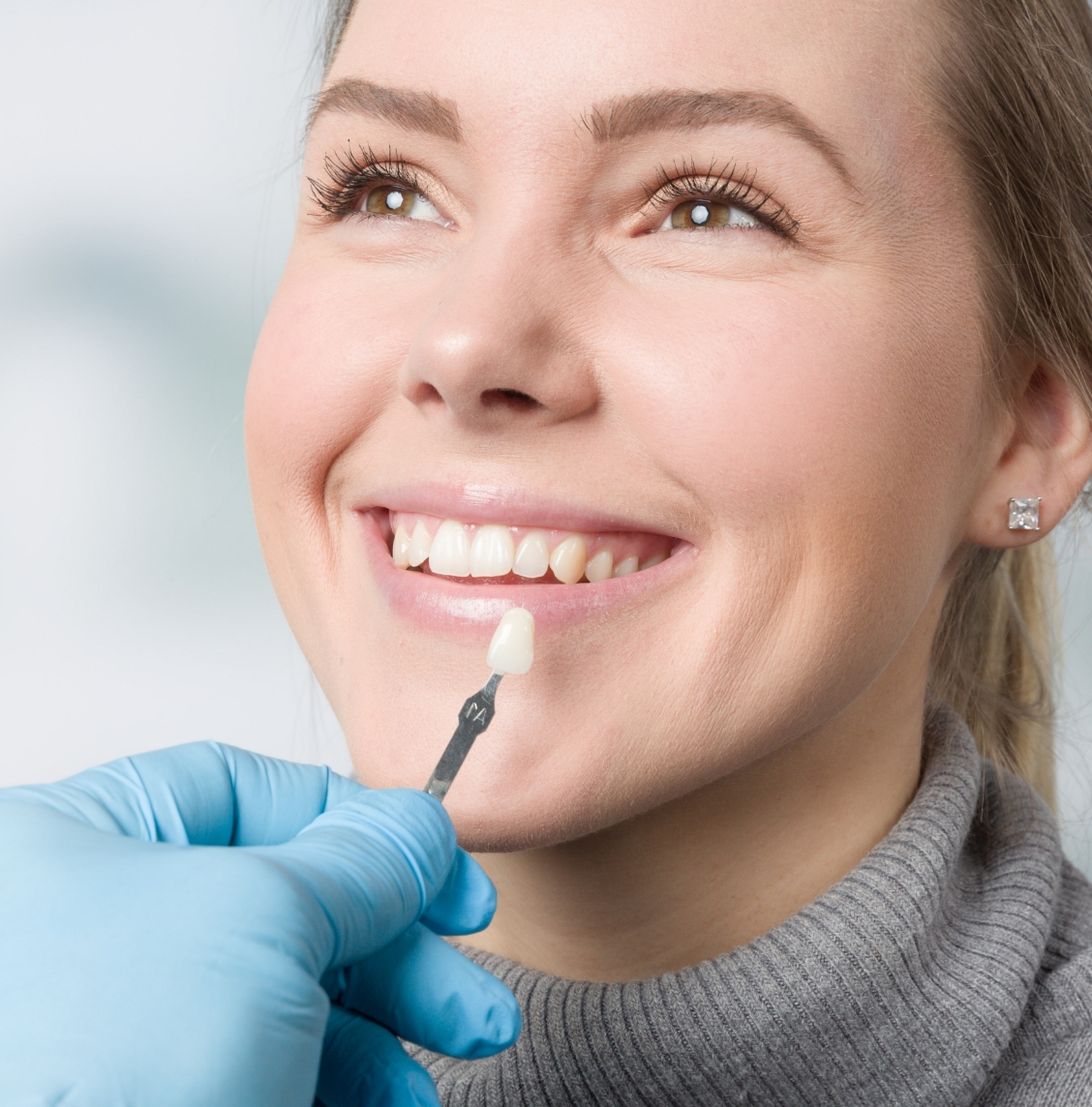

An honest look at what happens to the tooth underneath, how much enamel is removed, and how to protect your veneers for the long term.
Porcelain veneers do not ruin healthy teeth when they are planned and placed correctly. Because a thin layer of enamel is usually removed so the veneer fits naturally, the treatment is considered permanent and irreversible, which is why careful case selection and lifelong care matter.
Do porcelain veneers ruin your teeth?
No, not when placed correctly. This worry comes up in almost every veneer consultation we do, and it deserves a straight answer rather than a sales pitch.
Here is the honest version. Veneers do involve altering your teeth, and that part is permanent. What they do not do is destroy or weaken a healthy tooth. A well-fitted porcelain veneer is bonded over the prepared surface and seals it, so the tooth underneath stays protected and functional.
Most of the horror stories you find online trace back to one of three things: veneers placed on teeth that were not healthy enough to start with, too much enamel taken away, or no plan for what happens in ten years’ time. Those are planning failures, not an argument against veneers.
| The myth | The reality |
|---|---|
| Veneers destroy the teeth underneath | A bonded veneer covers and protects the prepared tooth surface |
| Your teeth rot under veneers | Decay comes from plaque at the margins, which good cleaning and check-ups prevent |
| You can take them off and go back to normal | Enamel does not grow back, so veneers are a lifelong commitment |
| Veneers are one-size-fits-all | Suitability depends on your enamel, gums, bite and grinding habits |
The takeaway: veneers are permanent, not destructive. The risk sits in poor case selection, not the treatment itself.
What actually happens to the tooth underneath
Let’s talk about enamel, because this is the part patients most want explained properly.
To fit a porcelain veneer so it looks natural rather than bulky, your dentist removes a thin layer from the front of the tooth. Healthdirect describes it simply: a small amount of your natural tooth may need to be trimmed so the veneer fits well, and because veneers are thin, not much needs to come off. In practice, that is usually somewhere around half a millimetre.
Enamel does not regenerate. That single fact is why veneers are classed as irreversible, and why we would rather you take your time deciding than rush in.
Once the veneer is bonded, though, that prepared surface is not left exposed. The porcelain is cemented directly to it and effectively becomes the tooth’s new outer layer. Patients are often surprised to hear their prepared teeth are less vulnerable afterwards, not more.
Some cases suit minimal or no-prep veneers, where little or no enamel is removed. They work best when teeth are slightly small, worn or set back, because there is already room for the porcelain without reducing anything. They are not right for teeth that are prominent, crowded or darkly stained: pile porcelain on top of those and the result looks thick and unnatural.
A local anaesthetic keeps the preparation appointment comfortable. Most people describe the whole thing as easier than a filling.
One honest limitation, straight from Healthdirect: veneers don’t fix tooth decay or bite problems. They change how a tooth looks. Anything structural or functional needs treating first.
The benefits of porcelain veneers
When veneers are the right tool, they do things nothing else quite manages.
- They handle stains that whitening cannot shift. Deep intrinsic discolouration, tetracycline banding, an old darkened filling or a tooth that greyed after root canal treatment will not respond to bleaching. Porcelain covers it. If your staining is surface level, professional teeth whitening is the cheaper and far less invasive place to start, and we will tell you so
- They resist staining themselves. Glazed porcelain is non-porous, so coffee, tea and red wine do not soak in the way they do into natural enamel or composite
- They look like teeth. Porcelain has a translucency that catches light much like real enamel, which is why it is difficult to spot well-made veneers
- They fix chips, wear and small gaps in one go. Uneven edges, a chipped front tooth, minor spacing or slightly misshapen teeth can all be addressed together
- They are fast compared with the alternatives. Straightening teeth properly takes months. Veneers usually take two appointments
Several teeth at once becomes a full smile makeover, where we plan shape, length, colour and proportion as one design rather than tooth by tooth.
The risks and limitations to know about
Every treatment has trade-offs, and you should hear ours before you commit.
- Temporary sensitivity. With enamel reduced, some teeth react to hot and cold for a few days to a few weeks. It generally settles. Tell us if it doesn’t
- Gum irritation. Gums can be tender for a week or so while they adapt to the new margins. Veneers that sit poorly against the gum line trap plaque, which is one reason fit matters so much
- Chipping and debonding. Porcelain is strong but it is still ceramic. Ice, nuts, fingernails, bottle tops and pens are what break veneers. A chipped veneer usually needs replacing rather than repairing, since porcelain cannot be patched the way composite can
- It is irreversible. Worth repeating. Once enamel is removed you are committed to having veneers on those teeth for life, including replacements down the track
- Colour is locked in. Whitening gels do not lighten porcelain. If you want a brighter shade later, the veneers have to be remade, so we whiten first and match the porcelain afterwards
There are also cases where veneers are simply the wrong answer, and we will say no:
- Untreated gum disease. Gums need to be healthy and stable first. Cleveland Clinic makes the same point, noting veneers are only an option once you are free of extensive cavities and gum disease. Our gum disease care comes first
- Active decay. Fillings and any root canal work get done before cosmetic treatment
- Significant bite problems or crowding. Veneers cannot correct how your teeth meet. Orthodontics may be the better first step, sometimes followed by veneers
- Heavy grinding without protection. Bruxism will crack porcelain. We can still proceed in many cases, but only alongside teeth grinding treatment and a night guard
- Thin or already worn enamel. Less enamel to bond to means a weaker result
How long do veneers last and how to protect them
With reasonable care, porcelain veneers commonly last 10 to 15 years or more before they need replacing. We have written a separate guide on how long porcelain veneers last with the detail.
The short version of looking after them:
- Brush twice daily and clean between your teeth. Decay starts at the margin where porcelain meets tooth, and that margin is the one part still vulnerable
- Wear a custom-fitted night guard if you grind or clench
- Don’t use your teeth as tools, and go easy on very hard foods. Cleveland Clinic specifically advises against biting straight into hard, crunchy things such as apples, carrots and tough cuts of meat
- Skip abrasive whitening toothpastes, which can dull the glaze
- Keep your regular check-ups so we can spot a lifting margin early
How much do porcelain veneers cost?
Cost depends on the material, how many teeth are involved and how complex your case is.
Drawing on Australian Dental Association fee-schedule data, a porcelain veneer (item numbers 556 and 578 x2) can cost up to approximately $2,036 per tooth. Composite veneers (items 526 and 578 x2) run up to approximately $836 per tooth.
Multiply that across a smile and the arithmetic gets real quickly. A six or eight tooth makeover is a substantial investment, which is exactly why we itemise everything and walk you through it before you decide anything.
Two other things you should know. Veneers are generally classed as a cosmetic treatment, so they are usually not covered by private health funds, though some policies may contribute where a veneer restores a genuinely damaged tooth. Ask your fund directly, and quote the item numbers when you do. Medicare does not cover cosmetic dental work.
Prices are indicative and correct at the time of writing; your exact fee is confirmed at your consultation.
Porcelain vs composite veneers, in brief
Both cover the front of the tooth. The difference is the material and how it gets there.
Porcelain veneers are made in a dental laboratory and bonded on at a second appointment. They last longer, resist stains better and look the most natural. Composite veneers are sculpted directly onto your teeth in a single visit, cost considerably less, and can usually be repaired if they chip, though they stain more readily and need replacing sooner.
Neither is better in the abstract. Budget, how long you want the result to hold, and the condition of your teeth all feed into it. Our full breakdown is here: porcelain compared with composite veneers, and you can read about composite veneers or our wider cosmetic dentistry options as well.
Why choose The Smile Collective for porcelain veneers in Melbourne and Mornington Peninsula
Veneers are a permanent decision, so the planning matters more than the porcelain. We would rather spend an extra appointment getting your case right than talk you into something that does not suit your teeth.
Our dentists are all Australian Dental Association members with vast general, oral surgical and orthodontic experience, and we are one of only a few practices on the Mornington Peninsula to offer dental implant placement. Dr Ronak (Ron) Patel, BDS MJDF PGDip(Implants), is a Director and Principal Dentist who graduated from Guy’s, King’s and St Thomas’ Dental School in 2003, holds the Diploma of Membership of the Joint Dental Faculties at the Royal College of Surgeons of England, and was the first dentist in Australia certified to treat dental phobia. Dr Priya Patel, BDS (Honours), is a Director with advanced training in facial aesthetics and clear aligners. Dr Fady Goher, BDSc ADC MFDS Edinburgh, is a Director and Principal Dentist with advanced training in aesthetic treatment planning and smile design, a Postgraduate Diploma in Implant Dentistry (2024) and his CBCT radiation licence (2025). Meet the wider team on our about us page.
Technology does the rest of the work. Our clinics use CEREC same-day restorations, EMS Airflow Guided Biofilm Therapy, laser dentistry and a CBCT 3D scanner, and sedation and sleep dentistry is available for patients who find dental visits difficult.
You will find us at six centres: Greensborough, Mooroolbark, Oakleigh and Strathmore across Melbourne, and Mount Eliza and Mornington on the Mornington Peninsula.
Book a veneer consultation at your nearest clinic: Greensborough | Mooroolbark | Oakleigh | Strathmore | Mount Eliza | Mornington
Book online or call your nearest Smile Collective centre.
Further reading
- Our Porcelain Veneers at The Smile Collective
- How long do porcelain veneers last?
- Porcelain vs Composite Veneers: Which Is Right for Your Smile?
- Smile Makeover at The Smile Collective